
Probiotics: What You Need To Know
The current publication is part of a series of materials which aim to support the mission of “Health and Beauty Lifestyle” Foundation to provide the public with knowledge and understanding of a holistic approach to health prevention culture, in which health is a harmony between body, mind and spirit.
“All Disease Begins in The Gut.”
The words are of Hippocrates – the father of modern medicine. He pronounced them more than 2000 years ago, and although they are not entirely accurate, we can undoubtedly state that gut bacteria and gut health have a significant impact on health.
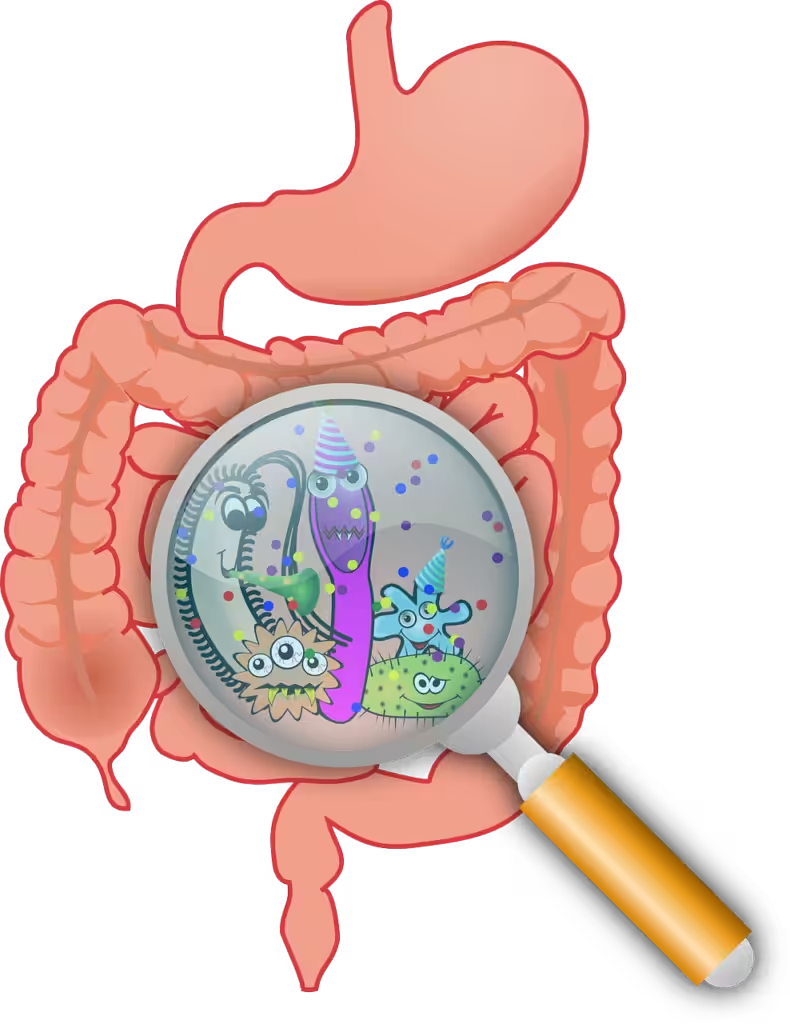
Hundreds of types of bacteria inhabit our digestive system. Not only are they a compulsory part of our existence, but many have proven beneficial for our health.
Our initial association with the word “bacteria” is for something dirty, for something harmful that brings with it health problems and discomfort. Many bacteria not only aren’t harmful to humans, but on the contrary, they help the body to various processes occurring in it.
Most of the bacteria in the human body are found in our gut, and the majority of these microscopic creatures are pretty harmless. They live in a micro-ecosystem called the microbiome. The intestinal microbiome plays a huge role in our health and can affect every aspect of our existence: from weight to emotional balance.
In the fight against internal imbalance, probiotics have become particularly popular in recent decades. These are the friendly bacteria that support healthy digestion. Let’s learn more about them.
What exactly are probiotics?
Probiotics are friendly bacteria that we need for vitality and good health. Probiotics have a beneficial effect on humans by improving the balance of flora in the digestive system. The word “probiotic”, formed by a combination of two PRO + BIOS parts, actually means “for life”.
They can be found in yoghurt, kefir, sauerkraut and other fermented foods, nutritional supplements and cosmetics.
Do not confuse probiotics with prebiotics, which are dietary fibres that help friendly bacteria feed.
Types of bacteria in probiotics
There are various probiotic bacteria that are good for health but have different effects on the body. It is important to the selection of probiotics to be addressed properly to the specific health condition. It is best to consult a medical specialist.
The most common groups are Lactobacillus and Bifidobacterium, but often we can see and Escherichia, Enterococcus, Bacillus, Propionibacterium and Saccharomyces (yeast).
Lactobacillus are lactic acid bacteria which inhabit the human body, convert lactose and other carbohydrates into lactic acid. The acidic environment they create inhibits the growth of many pathogenic bacteria and fungi.
Bifidobacteria account for up to 90% of the intestinal flora of breastfed infants. Their presence in the gut is beneficial for the child as bifidobacteria inhibit the development of various putrefactive and pathogenic microorganisms and contribute to the digestion of carbohydrates. At the end of the milk feeding, the bifidoflora is replaced by the usual intestinal microflora characteristic of adult organisms.
Why do we need probiotics?
To maintain a healthy digestive system, we must be sure that many “good” bacteria populate our gut. They have a number of essential functions, helping to improve digestion, establish the production of vitamins, alleviate the symptoms of irritable bowel syndrome and eliminate toxins. Probiotics are also involved in the production of nutrients to restore the intestinal mucosa, helping to increase resistance to infections, regulate immune function and prevent the growth of harmful bacteria.
The number of “good” bacteria can be significantly reduced due to the alcohol consumption and dietary fat, lack of fibre in the diet, increased stress, exposure to toxic substances and the use of antibiotics. All of these could have quite serious consequences such as skin problems, digestive distress, frequent illness and even autoimmune diseases. The regular use of probiotic-rich foods can avoid them.
Probiotic deficiency may be due to the fact that much of the food we consume today is treated with antibiotics and chemicals to reduce harmful bacteria in it. Unfortunately, these methods also kill beneficial bacteria. Antibiotics are often life-saving, but can seriously impair the balance of the gut microbiome and deplete good bacteria.
Therefore, the best option for our body is to strive to consume organic foods grown in healthy soil. And when it is necessary to resort to nutritional supplements.
Impact of probiotics on health
There are few areas with the most established research about the impact of probiotics:
Digestive Health
Naturally, the most studied sphere of the effects of probiotics is on their impact on the health of the digestive system. Their primary role for good digestion and their usefulness in the treatment and prevention of gastrointestinal diseases has been proven.
Probiotic supplements can help cure various types of diarrhoea, including antibiotic-related, acute diarrhoea, travellers’ diarrhoea, infectious diarrhoea and other related symptoms. They are most commonly used for prolonged intake of antibiotics, as they kill many of the natural bacteria in your gut. That leads to imbalance and allows harmful bacteria to thrive.
There are numerous studies on the beneficial effects of probiotics in the treatment of Helicobacter pylori infection. This bacterium colonises the stomach and is one of the main engines of ulcers and cancer of the stomach. Antibiotic therapy to deal with this bacterium is severe and prolonged. Probiotics reduce the side effects of antibiotics and increase the rate at which H. pylori is eradicated since the organic acids produced by some lactobacilli inhibit the growth and survival of this pathogen.
Eating foods rich in good bacteria and using probiotic supplements may help protect against inflammatory bowel diseases, including ulcerative colitis and Crohn’s disease. However, the evidence is more reliable for improving ulcerative colitis, while Crohn’s disease may not be influenced so strongly. In addition, there is ongoing research examining the role of probiotics in gluten problems, including celiac disease.
Weight Loss
Studies clearly show that probiotics have a significant impact on weight and body mass index. Scientists have not yet fully understood the connection between bacteria and weight, but they know that in overweight people, the gut microbiota is different from that of slender people. More precisely, those who suffer from weight problems have more bacteria, and lean people have more Bacteroides.
Firmicutes and Bacteroides make up about 90% of all bacteria in our gut. The change in their proportions can significantly affect our health. Due to their active production of short-chain fatty acids, Firmicutes increase the number of calories we absorb, which in part explains their relationship to overweight and obesity.
One of the significant functions of bacteria in our gut is to break down all the food we ingest into molecules that are absorbed by the blood and nourish our body. Intestinal bacteria are also involved in the production of vitamins, enzymes and short-chain fatty acids, which are concerned in the digestive process and metabolism.
So how do probiotics help us lose weight? First, beneficial bacteria aid us to absorb nutrients from everything we eat. That is important because no matter how healthy our diet is if we are unable to absorb nutrients, we will always be dissatisfied and hungry because the body will demand adequate nutrition.
Studies show that unbalanced unhealthy microflora leads to digestive disorders due to insufficient absorption of nutrients, no matter what food we eat.
Probiotics regulate hormones.
Beneficial bacteria also affect satiety by regulating hormones that send signals to the brain to stop eating. For example, probiotics influence leptin, a hormone produced by fat cells, which controls the feeling of fullness. Since fat cells in our body produce leptin, the more body fat, the more leptin is produced, which signals to the brain that we are full. So the body tries to stabilise the weight. Unfortunately, a cycle of increased fat accumulation (when satiety signals are ignored) leads to excessive production of leptin. At one point, this hormone in the system becomes too much, and the signalling process is impaired, causing leptin resistance. Thus, despite a large amount of this hormone in the body, the brain does not receive a signal for satiety. It thinks we are hungry and continues to order us to eat. It turns out that probiotics can improve sensitivity to leptin so that the brain receives the correct signals.
Probiotics reduce inflammation.
Inflammation is a well-known harbinger of metabolic syndrome, which increases the risk of high blood pressure, high blood sugar, abdominal fat and high cholesterol, which can lead to obesity and type 2 diabetes. Probiotics protect our intestinal barrier by preventing unwanted substances from entering our bloodstream. But if our microflora is unbalanced and gut permeability is increased, inflammatory molecules and toxins can enter the blood, causing allergic and immune reactions that lead to systemic inflammation and frightening weight gain. Beneficial bacteria enhance the intestinal barrier and regulate the immune system.
Probiotics balance blood sugar.
Likewise, blood sugar has a significant effect on weight. In life, balance is always important, and blood sugar levels are no exception. When the glucose in the blood is too high, this excess is converted into fat, and the insulin secreted by the pancreas in response to high sugar levels signals the body to stop burning fat. If the blood sugar level is too low, we want to eat a lot of sugar to get a quick energy boost, and the blood glucose inflow starts a vicious cycle of fat accumulation and weight gain. Fortunately, studies have shown that probiotics maintain healthy blood sugar, reducing insulin secretion and improving sensitivity to it.
And that’s not all. Probiotics reduce the symptoms of anxiety and inhibition, in people with clinical depression, lower the overall and “bad” levels of LDL cholesterol, may reduce blood pressure, boost immune function and the health of the skin.
Thanks to probiotics, which have a positive effect on many functions of our body, we remain healthy and happy and (if balanced) maintain optimal weight.
Sources:
1) food.inmyroom.ru – What are probiotics and where to find them.
2) healthline.com – Probiotics 101: A Simple Beginner’s Guide.
3) medium.com – 5 research based reasons to try probiotics.
4) cdrf.org – Probiotics Basics.
5) organicwoman.ru – How Probiotics Help Optimum Weight.
Disclaimer: The content on this website is intended for informational and educational purposes only. Information materials and articles published on the Site, including recommendations for healthy eating, appearance and workouts, do not replace qualified medical care. Please take care of yourself and consult with your doctor or another professional regarding your particular situation and condition – age, physical activity, body characteristics, health status, etc. The team of “Health and Beauty Lifestyle” Foundation does not guarantee the accuracy or completeness of the texts and is not responsible for their general or exact implementation.